

Let’s talk about the invisible system that decides how your phone feels in the real world. Not bars. Not a one-off speed test. The thing that actually determines who gets served first when the tower is busy is called QCI in LTE and 5QI in 5G. If you have ever wondered why your friend’s video call stays smooth while yours freezes, this is the reason.
Quick refresher. QCI is a label that tells the network how urgent your traffic is, how much delay it can tolerate, and whether it should get guaranteed capacity. The formal definition lives in the 3GPP standards. If you want the spec, here it is: 3GPP TS 23.203. For a more practical explanation, this guide is great: ShareTechnote on LTE QCI.
So why do many carriers keep QCI out of sight
1. Flexibility without the promise
If a plan never states its QCI or 5QI, the carrier can shift priority behind the scenes when a cell gets crowded. That makes operations easier, but it also means customers do not really know what they bought.
2. Fuzzy marketing is easier than precise labels
You have seen phrases like premium data and high speed data. Premium data is mostly about priority during congestion. High speed data is usually a bucket size or a throttle point. Mixing these ideas keeps things vague. Clear QCI or 5QI disclosure would cut through the confusion.
3. Fear of plan gaming
Some worry that if priority classes are public, people will find the cheapest path to higher priority or third parties will benchmark plan tiers too precisely. That is a fair concern, but it is solvable with simple policy and honest pricing.
4. Technical nuance becomes an excuse
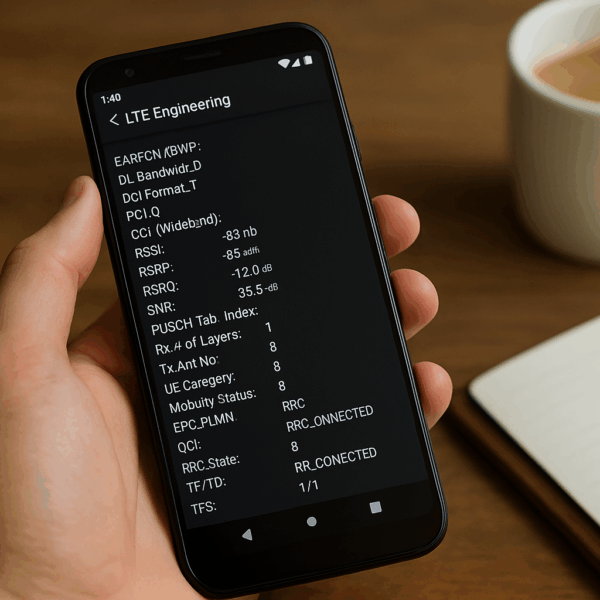
QCI is not a consumer setting. Many phones do not show it directly. Engineers see it in logs or with pro tools. That does not mean we should hide the concept. It means we should translate it into plain language.
5. The rules do not force it yet
In the United States, the FCC’s Broadband Consumer Labels push carriers to share prices, typical speeds, caps, and network management links. They stop short of requiring a clear line like general data priority equals QCI 8. You can read the label framework here: FCC Broadband Consumer Labels.
Why carriers should disclose QCI and 5QI
Comparison shopping that actually helps people
Publish the priority class the same way you publish typical speeds. Even a simple statement like general data priority equals QCI 8 on LTE and an equivalent standardized 5QI on 5G would let customers compare carriers with confidence.
Less confusion, fewer surprises
Spell out the difference between priority and speed buckets. Say when deprioritization might kick in. Say how video is treated. That is how you reduce the gap between what people expect and what they get.
Trust grows when it matters most
People judge their carrier at stadiums, concerts, rush hour, and busy downtowns. Priority is the difference between smooth and choppy in those moments. Sharing it builds credibility.
Great engineering deserves the win
If you invested in capacity and smart scheduling, transparency lets your network win for the right reason. The experience speaks for itself when customers understand the rules.
What good transparency could look like
- Publish the class. Example: general data priority equals QCI 8 on LTE and a matching standardized 5QI on 5G.
- Publish exceptions. Example: after a certain amount of use, your general data may move to standard priority during congestion.
- Publish video and hotspot rules. Example: video resolution limits and how to unlock higher quality.
- Put it where people decide. Show the same language on the plan page and in the app checkout, and link it on the FCC label page.
If you want a friendly primer first, start here: US Mobile: What is QCI.
Where US Mobile stands
We believe in building in public and earning trust with real performance. Here is the simple version today.
- Unlimited Premium on Warp and Dark Star includes QCI 8 for general data. That means steadier performance when towers are busy compared with QCI 9.
- Unlimited Starter and Flex are mapped to QCI 9 by default. You can step up with add ons where available.
- QCI 7 on Dark Star is in beta with VIP customers. The goal is ultra responsive performance in crowded places. When it is ready, you will feel the difference.
Plan details live here if you want to compare options or switch networks on your account: US Mobile plans.
Answers to common questions
Does QCI change my top speed
When a cell is empty, everyone can fly. Priority matters when the cell is busy. Higher priority helps your traffic get served first, which feels like smoother speed and lower delay in the moments that count.
Why can the same QCI number feel different across carriers
The number is standardized, the mapping is not. Carriers decide which apps and plan tiers land in each class and how schedulers are tuned. That is why real world testing in your neighborhood beats any chart on the internet.
Is this only an LTE thing
LTE uses QCI. 5G uses 5QI. The idea is the same, but 5QI adds more granular categories for things like delay critical services and massive IoT. If you want the deep spec, this is the 5G architecture document: 3GPP TS 23.501.
Further reading
- 3GPP TS 23.203 for LTE QCI definitions
- ShareTechnote for a practical engineer’s view
- FCC Broadband Consumer Labels for what carriers must disclose today
- US Mobile: What is QCI for a friendly walkthrough
Bottom line. People deserve to know how their experience is shaped. Clear priority disclosure helps you choose the right plan and helps the best networks earn trust. We will keep pushing for clarity and we will keep shipping features that make your connection feel effortless.

408 Comments